

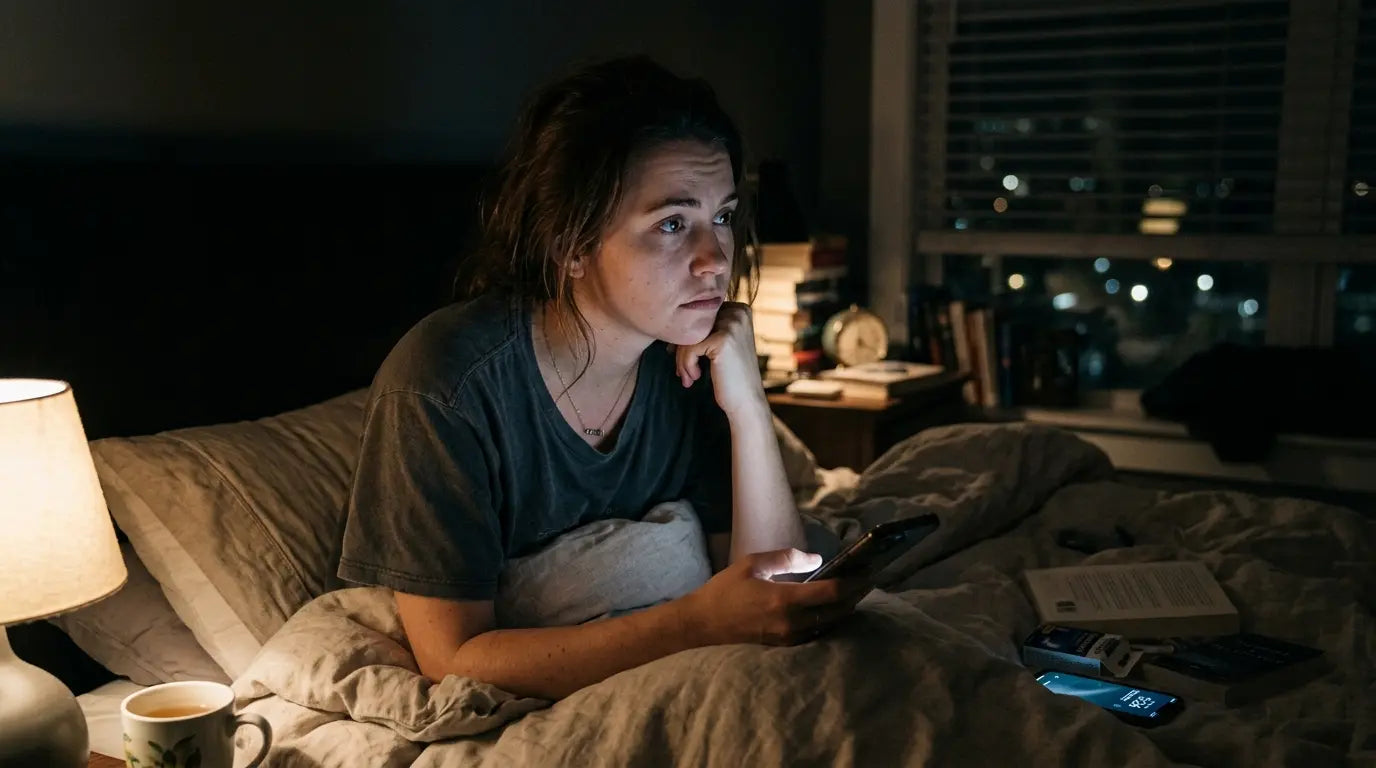
If you've found yourself lying awake at 2 AM, staring at the ceiling while your mind races, you're not broken. You're not alone either. An estimated 35% of adults struggle with insomnia symptoms, and millions more experience occasional nights of tossing and turning. The frustration of wanting sleep but being unable to achieve it is uniquely exhausting.
Here's what's important to know: most sleep struggles have identifiable causes. And once you understand *why* you can't sleep at night, you can actually do something about it. This article breaks down the real reasons your sleep is suffering—and more importantly, gives you actionable solutions you can implement starting tonight.
The Five Most Common Reasons You Can't Sleep
Before we jump into solutions, let's talk about what's actually keeping you awake. Sleep disruption rarely happens for no reason. Understanding the root cause is half the battle.
1. Stress and Racing Thoughts
This is the heavyweight champion of sleep killers. When you're stressed, your nervous system stays in "fight-or-flight" mode, pumping cortisol through your bloodstream. Your mind loops over tomorrow's meeting, that uncomfortable conversation, or financial worries. You're lying in bed physically, but mentally you're running a marathon.
Chronic stress doesn't just keep you awake—it changes your sleep architecture. Your body produces less melatonin and spends less time in restorative deep sleep, even when you do eventually fall asleep. It's a vicious cycle: stress causes poor sleep, poor sleep increases stress hormones, which causes more stress. The pattern reinforces itself.
Solution: We'll cover this in detail below, but stress management techniques like breathwork, journaling, and natural relaxation supplements can help interrupt this cycle.
2. Blue Light and Screen Time Before Bed
Your phone, laptop, and television emit blue light that directly suppresses melatonin production—the hormone that tells your body it's time to sleep. When you're scrolling social media or working emails at 9 PM, you're essentially telling your circadian rhythm "it's still daytime."
The problem isn't just the light. It's that engaging content (especially anything anxiety-inducing or stimulating) activates your brain when it should be winding down. Studies show that screen use within 30-60 minutes of bedtime consistently delays sleep onset and reduces sleep quality.
3. Hormonal Fluctuations
If you menstruate, your cycle directly influences sleep quality. The luteal phase (second half of your cycle) sees drops in estrogen and serotonin, which can trigger insomnia. Similarly, perimenopause and menopause bring hormonal shifts that disrupt sleep architecture.
For everyone, hormonal issues matter: low testosterone, thyroid dysfunction, and cortisol dysregulation all impair sleep. If your sleep problems are cyclical or coincide with hormonal changes, this might be your primary culprit.
4. Caffeine and Alcohol Timing
Caffeine has a half-life of 5 hours, meaning that 2 PM coffee is still affecting your system at 10 PM. And while alcohol might help you fall asleep initially, it fragments your sleep and prevents deep restorative sleep stages. You might sleep 7 hours but feel like you barely rested.
5. Underlying Sleep Disorders and Medical Conditions
Sometimes, persistent insomnia points to sleep apnea, restless leg syndrome, or other medical conditions. If you've tried basic interventions with no improvement, or if your partner reports you snoring or gasping, consult a healthcare provider for proper evaluation.
7 Science-Backed Solutions to Help You Sleep Better
Now that we've identified the potential causes, here are evidence-based strategies to reclaim your sleep.
Start With Sleep Hygiene Basics
This sounds simple, but the fundamentals work: keep your bedroom cool (65-68°F is ideal), dark, and quiet. Maintain a consistent sleep-wake schedule, even on weekends. Avoid large meals within 3 hours of bed. These foundational practices optimize your environment for sleep and are free to implement.
Create a Pre-Sleep Wind-Down Ritual
Your body needs a signal that sleep is coming. Dim lights 30-60 minutes before bed, put your phone away, and try something calming: reading, gentle stretching, or meditation. This transition period tells your nervous system to shift into parasympathetic mode. Progressive muscle relaxation or guided imagery are particularly effective for racing minds.
Manage Stress Proactively (Not Just at Bedtime)
Trying to manage stress only when you're lying in bed is too late—your nervous system is already activated. Instead, build stress management into your daily routine: morning walks, breathwork practices, journaling, or therapy. Regular exercise (though not within 3 hours of sleep) significantly improves sleep quality. When stress is managed during the day, it's less likely to hijack your sleep.
For many people, natural stress support supplements containing L-theanine and GABA provide the extra support needed to keep nervous system arousal below the sleep threshold. These work best when combined with behavioral practices, not as a solo solution.
Optimize Your Caffeine and Alcohol Intake
Cut caffeine after 2 PM, and ideally, taper earlier if you're sensitive. If you drink alcohol, give it 3+ hours to clear before sleep. One drink might help you fall asleep, but the sleep quality will suffer. The trade-off usually isn't worth it.
Get Natural Light Exposure (Especially in Morning)
Morning sunlight exposure is one of the most powerful sleep regulators. It sets your circadian rhythm forward, making you naturally more alert during the day and sleepier at night. Aim for 15-30 minutes of direct sunlight within the first hour of waking. This is powerful, free, and works with your biology—not against it.
Consider Targeted Nutritional Support
Certain nutrients directly support sleep. Melatonin is well-researched for helping with sleep onset. Magnesium, valerian root, lavender, and chamomile have centuries of traditional use backed by modern studies showing they promote relaxation and sleep quality. Fast-dissolving sleep supplement strips combining these ingredients offer a convenient way to support natural sleep without the grogginess of prescription options.
If Sleep Issues Persist, Seek Professional Help
If you've tried these approaches for 2-3 weeks with minimal improvement, or if your sleep deprivation is affecting your daily functioning, talk to a healthcare provider. Sleep issues can sometimes signal underlying health conditions worth investigating. A sleep specialist or cognitive behavioral therapy for insomnia (CBT-I) can be transformative.
The Connection Between Stress, Sleep, and Appetite
Here's something many people don't realize: poor sleep and stress create a feedback loop with your appetite and mood. When you're sleep-deprived, your body cranks up hunger hormones and cravings—especially for sugary, high-calorie foods. This is why understanding the stress-sleep connection matters for overall wellness. Managing stress during the day helps you sleep better, which then helps regulate appetite and mood the next day.
Your Sleep Recovery Timeline
How long does it take to fix sleep problems? For most people, basic sleep hygiene improvements yield results within 1-2 weeks. If you add stress management or supplements, you might notice changes within days. However, if insomnia has been chronic (several months), recovery typically takes 4-8 weeks as your system recalibrates.
The key is consistency. Your sleep rhythm responds to patterns, not one-off efforts. Commit to these changes for at least 3 weeks before evaluating whether they're working.
Frequently Asked Questions About Sleep and Insomnia
Sources & Further Reading
- Wamsley, E. J., & Stickgold, R. (2011). Memory, sleep and dreaming: experiencing consolidation. Sleep Medicine Reviews, 15(1), 1–8. https://pubmed.ncbi.nlm.nih.gov/20359916/
- Walker, M. (2017). Why We Sleep: Unlocking the Power of Sleep and Dreams. Scribner.
- Gooley, J. J., Chamberlain, K., Smith, K. A., et al. (2011). Exposure to room light before bedtime suppresses melatonin onset and shortens melatonin duration. Journal of Clinical Endocrinology & Metabolism, 96(3), E463–E472. https://pubmed.ncbi.nlm.nih.gov/21193540/
- Riemann, D., Krone, L. B., Wulff, K., & Nissen, C. (2020). Sleep, insomnia, and depression. Neuropsychopharmacology, 45(1), 74–89. https://pubmed.ncbi.nlm.nih.gov/31862958/
- Trinder, J., Kleiman, J., Carrington, M., et al. (2001). Does the circadian rhythm of cortisol influence limb movement during sleep? Sleep, 24(5), 571–580. https://pubmed.ncbi.nlm.nih.gov/11480654/
- Cheng, S. H., Shih, C. C., Lee, I. H., et al. (2012). A study on the sleep quality of incoming university students. Journal of Psychosomatic Research, 68(5), 427–433. https://pubmed.ncbi.nlm.nih.gov/22464424/
Ready to Sleep Better Tonight?
If stress and racing thoughts are keeping you awake, supporting your nervous system with natural ingredients can make a real difference. Moodly Dream Sleep Strips combine valerian root, lavender, chamomile, and melatonin in a fast-dissolving format that's easy to use right before bed. No pills, no powder—just 30 seconds to better sleep support.
Pair them with the behavioral strategies above for best results. Your sleep recovery is absolutely possible.


