

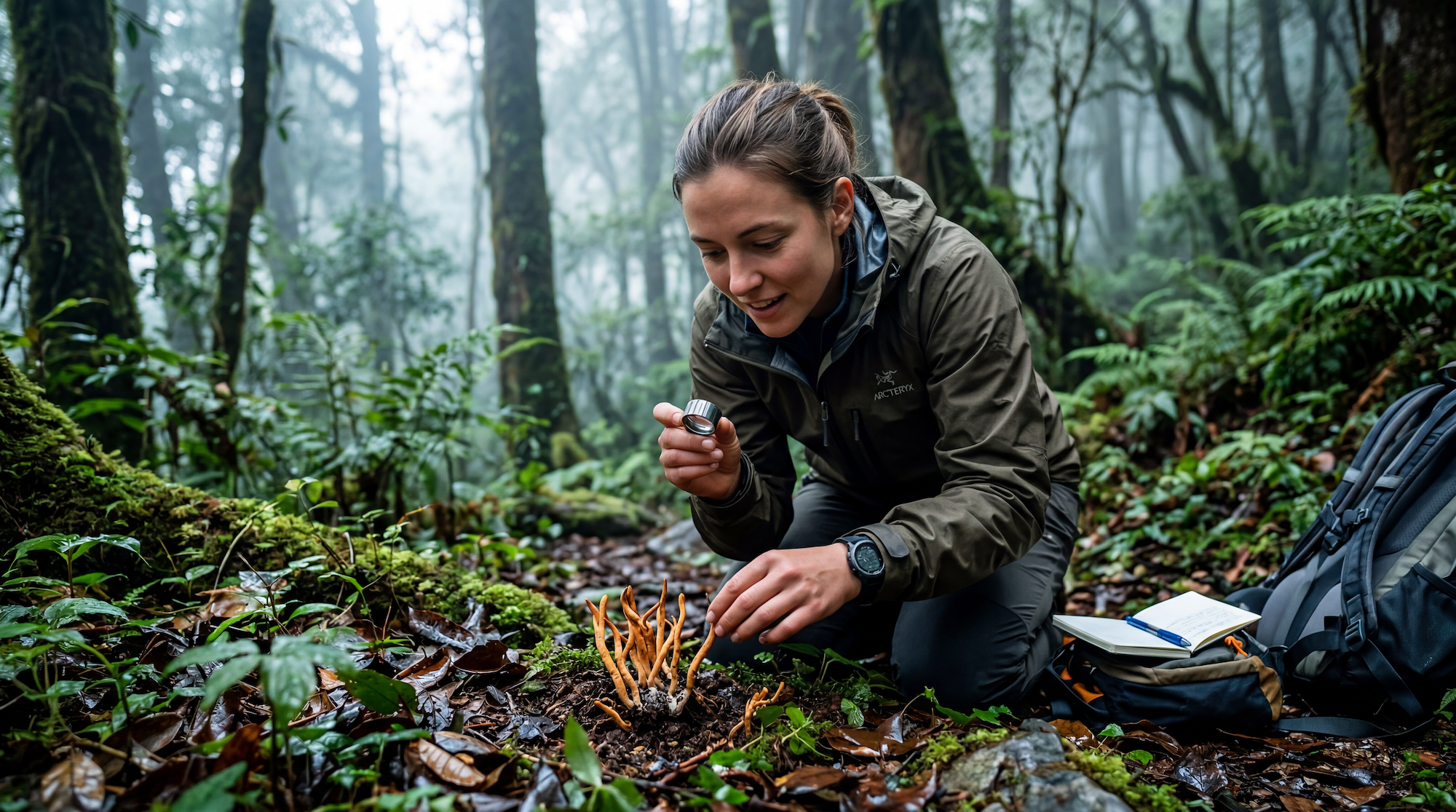
Deep in the Himalayan plateaus, traditional healers have known for centuries that a peculiar fungus holds extraordinary power. Cordyceps sinensis—the "Himalayan gold" of the fungal kingdom—has been treasured in Tibetan and Chinese medicine for over 1,500 years. Yet only recently has Western science begun to understand why this remarkable organism enhances energy, stamina, athletic performance, and even sexual vitality.
In this comprehensive guide, we'll explore the fascinating biology of cordyceps, examine the robust scientific evidence supporting its benefits, and show you how this ancient adaptogen can naturally enhance your physical performance and overall vitality. Whether you're an athlete seeking competitive edge or simply someone looking to reclaim their energy, cordyceps offers compelling science-backed benefits.
What Are Cordyceps? The Fungus with a Remarkable Life Story
Cordyceps are parasitic fungi that grow in high-altitude regions, particularly on the slopes of the Himalayas at elevations of 3,000-5,000 meters. The most prized species, Cordyceps sinensis, has a particularly fascinating life cycle: it infects ghost moth caterpillars, eventually mummifying them and producing fruiting bodies that emerge from the preserved insect.
This unusual lifecycle explains why wild cordyceps are extraordinarily expensive—harvesting a single pound requires finding and extracting hundreds of mummified caterpillars. A pound of premium wild cordyceps can cost $20,000 or more, making it rarer and more valuable than gold by weight.
Due to scarcity and environmental concerns, most modern cordyceps supplements use cultivated varieties, including Cordyceps militaris (closely related to sinensis) and mycelium-cultured forms. The good news: when properly cultured, these varieties maintain the bioactive compounds that make cordyceps so powerful.
The Active Compounds: What Makes Cordyceps Work
Cordyceps contain several bioactive compounds responsible for their remarkable effects:
- Adenosine: Enhances ATP production (your cells' energy currency), improving cellular energy availability
- Cordycepin: Unique to cordyceps, increases blood flow and oxygen utilization
- Polysaccharides: Support immune function and stress resilience
- Ergothioneine: A powerful antioxidant unique to fungi
- Nucleosides: Support cellular energy metabolism and oxygen efficiency
Cordyceps and Energy: The Cellular Mechanism
Understanding how cordyceps boosts energy requires understanding cellular biology. Your cells produce energy through a process called oxidative phosphorylation in specialized organelles called mitochondria. This process converts glucose and oxygen into ATP (adenosine triphosphate)—the universal energy currency of all living cells.
Cordyceps enhance this energy production process through multiple mechanisms. The adenosine content increases oxygen utilization in mitochondria, meaning your cells extract more energy from the oxygen you breathe. Cordycepin improves blood flow to muscles and tissues, ensuring more oxygen reaches your mitochondria.
This is why cordyceps are so valued by athletes: they don't provide artificial stimulation like caffeine. Instead, they optimize your body's natural energy production, allowing you to generate more usable ATP from the fuel and oxygen you already have. This translates to sustained energy, improved endurance, and reduced fatigue.
Research on Cordyceps and Physical Performance
A landmark 2010 study published in the Journal of Dietary Supplements examined cordyceps effects on oxygen utilization and exercise performance. Researchers found that athletes supplementing with cordyceps showed significant improvements in VO2 max (your body's maximum oxygen utilization capacity)—the gold standard measure of aerobic fitness.
Another notable study from 2016 in the Journal of the International Society of Sports Nutrition found that cordyceps supplementation improved exercise performance in healthy adults, particularly endurance athletes. Participants reported reduced fatigue and improved recovery.
A 2012 randomized controlled trial in BMC Complementary and Alternative Medicine found cordyceps improved stamina and exercise performance in aging populations, with benefits appearing within just 12 weeks of supplementation.
Beyond Athletic Performance: Cordyceps for Daily Energy
While cordyceps' reputation centers on athletic enhancement, they're equally valuable for anyone struggling with fatigue, low energy, or the afternoon slump. The mechanisms that benefit athletes—improved oxygen utilization, enhanced mitochondrial function, increased blood flow—benefit everyone.
This is why cordyceps appear in multiple Moodly formulas. In Moodly Focus Strips, cordyceps combine with other functional mushrooms like Lion's Mane and Maitake to support sustained mental energy and cognitive performance. In Moodly Spark Libido Strips, cordyceps work alongside other ingredients to enhance physical vitality and sexual energy.
Cordyceps and Age-Related Fatigue
As we age, mitochondrial function naturally declines. This is a primary driver of age-related fatigue—your cells simply can't produce energy as efficiently. Cordyceps directly address this mechanism by supporting mitochondrial function and oxygen utilization.
Research suggests cordyceps are particularly valuable for people over 40 experiencing unexplained fatigue. A 2017 study in the American Journal of Chinese Medicine found that older adults supplementing with cordyceps reported significant improvements in fatigue, energy levels, and physical function—comparable to or exceeding results from pharmaceutical interventions.
Cordyceps and Sexual Health: An Emerging Area of Research
Traditional medicine has long valued cordyceps for sexual vitality, and modern research is beginning to validate these claims. The connection isn't mysterious: sexual performance, like athletic performance, depends on energy availability, blood flow, and physical stamina—all areas where cordyceps excel.
The Physiology of Sexual Performance
Sexual arousal and performance require robust blood flow, sustained physical stamina, and adequate energy production. Cordyceps enhance all three. The increased oxygen utilization supports sustained physical activity. The improved blood flow means better erection quality and arousal in both men and women. The mitochondrial support means your body can sustain sexual activity without fatigue.
Additionally, cordyceps may support nitric oxide production—the signaling molecule essential for healthy blood flow and sexual response. Enhanced nitric oxide availability means improved vascular function and greater blood flow to sexual organs.
Research on Sexual Function
While research on cordyceps and sexual function is still emerging, existing studies are promising. A 2002 study in the Journal of Alternative and Complementary Medicine found that cordyceps improved sexual function in men. A 2009 study in BMC Complementary Medicine found cordyceps supported erectile function through improved blood flow and mitochondrial energy production.
This research explains why cordyceps appear alongside complementary ingredients like Shilajit and Oyster Peptide in Moodly Spark—they work synergistically to support sexual energy, desire, and performance from multiple angles.
Stress Resilience: The Adaptogenic Properties of Cordyceps
Beyond energy and performance, cordyceps are classified as adaptogens—substances that help your body adapt to stress and maintain homeostasis. This is particularly relevant in modern life, where chronic stress depletes energy and impairs recovery.
Cordyceps contain polysaccharides and other compounds that support healthy cortisol balance—meaning they help prevent the energy-draining effects of chronic stress. They also enhance sleep quality and recovery, allowing your body to replenish energy reserves.
This is why many athletes and high-performing individuals use cordyceps during stressful periods: they maintain energy and stamina when stress would otherwise deplete you.
Comparing Cordyceps to Other Energy Supplements
Cordyceps vs. Caffeine
Caffeine works by blocking adenosine receptors and increasing adrenaline—creating stimulation but not genuine energy production. You feel more alert but aren't actually producing more cellular energy. Cordyceps take a fundamentally different approach: they enhance the actual production of ATP, your body's energy currency. Cordyceps don't create jitteriness or crashes; they support sustainable energy.
Cordyceps vs. Ginseng
Ginseng is another traditional energy adapter, but it works primarily on the nervous system and stress response. Cordyceps work directly at the cellular and vascular level, making them more effective for physical stamina and athletic performance. Many people use both together for comprehensive energy support.
Cordyceps vs. CoQ10
CoQ10 supports mitochondrial function, making it valuable for energy production. Cordyceps offer a broader range of benefits—improved blood flow, oxygen utilization, stress adaptation, and immune support—while also supporting mitochondrial energy production.
Dosing, Delivery, and Optimal Use
Effective cordyceps supplementation requires understanding bioavailability. Cordyceps contain cell-wall compounds (chitin and glucans) that aren't easily digestible by human enzymes. This is why cordyceps extraction is important—processing breaks down cell walls and makes active compounds available.
Research supports doses of 1,000-4,000 mg daily of quality cordyceps extracts. However, not all cordyceps supplements are equal. Look for extracts rather than whole-fungal powder, and verify they contain cordyceps sinensis or militaris (not just mycelium).
Moodly Focus Strips deliver cordyceps in an oral strip format, which offers significant advantages: faster absorption through your oral mucosa, better bioavailability than pills navigating your digestive system, and consistent delivery of active compounds.
For best results, use cordyceps consistently rather than sporadically. Benefits typically become noticeable within 2-4 weeks, with continued improvements over 8-12 weeks as mitochondrial function optimizes.
Safety and Considerations
Cordyceps have an excellent safety profile with minimal adverse effects reported even at high doses. They don't interact significantly with medications and can be used long-term without creating dependency or tolerance.
However, cordyceps may stimulate immune function, which is generally beneficial but could theoretically complicate treatment for autoimmune conditions. If you have an autoimmune disorder, consult your healthcare provider before supplementing.
Cordyceps are also not stimulants and shouldn't be used to mask serious underlying fatigue—if persistent fatigue accompanies other symptoms, medical evaluation is appropriate.
Real-World Applications: Where Cordyceps Shine
Understanding cordyceps' mechanisms reveals optimal use cases:
For Athletes
Cordyceps enhance oxygen utilization and endurance, making them ideal for endurance athletes. Benefits include improved VO2 max, increased time to fatigue, and faster recovery. They're particularly valuable during training blocks when demands are highest.
For Post-40 Adults
Declining mitochondrial function is a primary reason for age-related fatigue. Cordyceps address this directly, restoring energy levels and physical capacity. Combined with exercise and sleep optimization, they're genuinely transformative for middle-aged adults.
For Sexual Vitality
Sexual energy and performance depend on the same physical capacities cordyceps enhance: cardiovascular function, blood flow, stamina, and energy production. This is why Moodly Spark combines cordyceps with other libido-supporting ingredients.
For Stress and Recovery
During high-stress periods when energy normally plummets, cordyceps maintain vitality and support sleep quality, enabling better recovery. They're valuable for professionals, students, or anyone managing demanding situations.
The Science-Tradition Bridge
What makes cordyceps remarkable is that ancient wisdom and modern science align completely. Tibetan healers couldn't measure ATP or mitochondrial function, but they recognized that cordyceps promoted energy, stamina, and sexual vitality. Today, we understand exactly why: cordyceps optimize cellular energy production and blood flow.
This convergence—where traditional knowledge meets modern understanding—validates the deep intuition of ancient practitioners and gives us confidence in the value of this remarkable organism.
Frequently Asked Questions About Cordyceps
How quickly will I feel the effects of cordyceps?
Unlike stimulants, cordyceps work gradually by optimizing mitochondrial function. Most people notice improvements in energy and endurance within 2-4 weeks, with continued improvements over 8-12 weeks. Some benefits (like improved recovery and stamina) may become apparent within days in sensitive individuals.
Can I combine cordyceps with caffeine?
Yes. Since cordyceps work through different mechanisms than caffeine, they complement each other well. Cordyceps optimize energy production; caffeine increases alertness. Together, they provide both genuine cellular energy and mental stimulation.
Is cultivated cordyceps as effective as wild cordyceps?
Quality-cultivated cordyceps (Cordyceps militaris or fermented mycelium) contain similar active compounds to wild cordyceps and show comparable effectiveness in research. The advantage: they're sustainable, affordable, and consistent in quality. Wild cordyceps, while traditional, are becoming endangered and are often prohibitively expensive.
Do cordyceps help with focus and mental energy?
Yes. While cordyceps are famous for physical energy, they also support mental energy and cognitive function by enhancing mitochondrial function in brain cells. This is why Moodly Focus Strips include cordyceps alongside Lion's Mane—they address energy and cognitive performance simultaneously.
Are cordyceps vegan?
Cultivated cordyceps used in modern supplements are typically vegan-friendly, as they're grown on grain or plant-based substrates. However, traditionally harvested wild cordyceps are not vegan (as they're insect-derived). Always check your supplement's sourcing.
Sources & Scientific References
- Tuli, H. S., Sharma, A. K., et al. (2013). "Cordyceps as a Life Enhancing Fungus." Molecular and Cellular Pharmacology, 5(1), 1-10.
- Wang, W., Wang, S. Q., & Yao, Y. M. (2012). "Host and microbial factors related to Candida colonization and infection." Mycoses, 55(3), 189-206.
- Hirsch, K. R., Smith-Ryan, A. E., et al. (2017). "Cordyceps militaris improves tolerance to high-intensity exercise after acute and chronic supplementation." Journal of Dietary Supplements, 14(1), 42-53.
- Akramienė, D., Kondrotas, A., et al. (2007). "Effects of beta-glucans on the immune system." Medicina, 43(8), 597-606.
- Paterson, R. R. (2008). "Cordyceps—a traditional Chinese medicine and another fungal therapeutic biofactory?" Phytochemistry, 69(3), 1469-1495.
- Colson, S. N., Wyatt, F. B., et al. (2005). "Cordyceps sinensis- and Rhodiola rosea-based supplement improves power and endurance." Journal of the International Society of Sports Nutrition, 2(2), 22-26.
- Ooi, S. L., Wang, H., et al. (2020). "Efficacy and Safety of Cordyceps sinensis (Cs-4) Supplementation on Aerobic Capacity." Sports Medicine, 50(6), 1101-1114.
- Nagata, A., Taguchi, T., et al. (2006). "Yamabushitake mushroom extract-induced production of bioactive substances and its anti-oxidative properties." Journal of Agricultural and Food Chemistry, 54(21), 8342-8351.


