

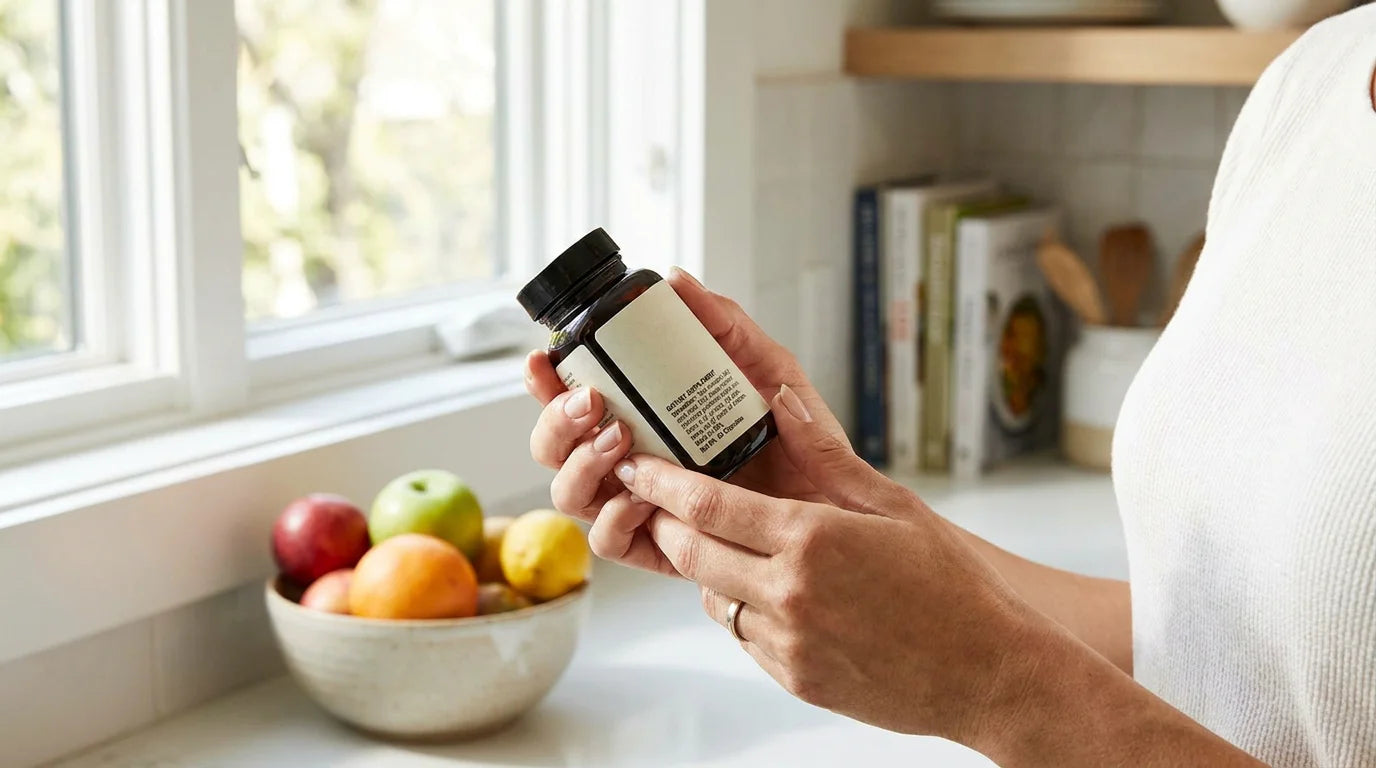
More than half of American adults take at least one dietary supplement on a regular basis. Yet many consumers admit they do not fully understand the information printed on the back of the bottle. The supplement facts panel is the single most important element on any dietary supplement label, and knowing how to read it is essential for making informed decisions about your wellness routine. For a broader perspective on how supplements can support daily health, our guide to dietary supplements benefits and risks is an excellent starting point.
Whether you are choosing a multivitamin, a botanical extract, or a fast-dissolving oral strip, the information on that panel tells you exactly what you are putting into your body. Understanding serving sizes, percent daily values, and ingredient sourcing details empowers you to compare products accurately and avoid misleading marketing claims. This guide breaks down every component of the panel, explains the regulatory framework behind it, and offers practical tips for using that knowledge in your everyday supplement choices.
What Is a Supplement Facts Panel and Why Does It Matter?

A supplement facts panel is a standardized information box that appears on every dietary supplement sold in the United States. When it comes to dietary supplements, the label is not just a marketing tool; it is a legal document. The U.S. Food and Drug Administration (FDA) regulates the information that must appear on supplement packaging and how it must be presented, ensuring that consumers can make direct, apples-to-apples comparisons between products.
Unlike a nutrition facts panel, which appears on conventional food products, the supplement facts panel is exclusively for dietary supplements. It details the active dietary ingredients, their quantities per serving, and their relationship to established reference values. This distinction matters because supplements and foods follow different regulatory pathways, and the information each panel is required to convey reflects those differences.
Dietary supplements fall under the Dietary Supplement Health and Education Act (DSHEA), which treats supplements as a category of food. This means supplements do not require FDA preapproval before going to market, but they do require compliant labeling and proper good manufacturing practices (GMPs). That is precisely why learning to read the panel yourself is so important: you are the final quality checkpoint.
Key Elements Required on Every Supplement Facts Label
The FDA outlines specific mandatory elements that every supplement facts panel must include. Missing even one of these elements can put a product out of compliance. Here is what to look for when you pick up any supplement.
Serving Size and Servings Per Container
The serving size tells you the recommended amount for a single use, such as "1 capsule," "2 gummies," or "1 oral strip." This is the baseline for every other number on the panel. If you take more or less than the listed serving, you will need to adjust all values accordingly. The servings per container figure tells you how many total doses the package holds, though the FDA does not require this when the net quantity statement already makes it obvious.
Dietary Ingredients With Established Daily Values
Nutrients that have a Reference Daily Intake (RDI) or Daily Reference Value (DRV) must be listed with their quantity per serving and their percent daily value (%DV). According to FDA labeling guidance, these nutrients include vitamins such as vitamin D, minerals such as calcium and iron, and macronutrient categories like total fat and dietary fiber. The %DV helps you understand at a glance whether a serving provides a little or a lot of a given nutrient relative to daily needs.
Other Dietary Ingredients Without Daily Values
Many supplements contain ingredients for which no official DRV or RDI has been established. Botanical extracts, amino acids, and proprietary compounds fall into this category. These must still be listed by their common or usual name along with the quantitative amount per serving. However, no %DV will appear next to them; instead, you will typically see a dagger symbol (†) and a footnote reading "Daily Value not established."
How Supplement Facts Differ From Nutrition Facts
Consumers frequently confuse these two panels, and the distinction is more than cosmetic. The FDA identifies several major regulatory differences that affect what you see on each label type.
- Ingredients without established daily values must appear on the supplement facts panel but are not permitted on a nutrition facts panel.
- Plant part disclosure (for example, "root" or "leaf") is required on supplement labels but is not allowed on food labels.
- Ingredient sourcing (such as "from wild-caught fish") may appear on a supplement panel but cannot appear on a nutrition facts panel.
- Zero-value nutrients: supplements are not permitted to list "zero" amounts of nutrients, whereas food products are required to do so.
These differences exist because supplements often contain specialized botanical or proprietary ingredients that do not have standardized nutritional profiles. Understanding these rules helps you evaluate a product more critically. If you are comparing delivery methods, our overview of supplement delivery formats explained covers how the format itself can influence ingredient absorption and labeling.
Understanding Percent Daily Value and Dosage

The percent daily value is one of the most useful but frequently misunderstood figures on a supplement facts panel. It represents the proportion of a nutrient's recommended daily intake delivered by a single serving of the product, based on a 2,000-calorie diet for adults and children aged four and older.
As a general guideline, 5% DV or less is considered low and 20% DV or more is considered high for a given nutrient. These thresholds help you quickly identify whether a supplement meaningfully contributes to your daily nutrient needs or delivers only trace amounts. Keep in mind that some supplements intentionally provide well above 100% DV for certain vitamins, which may be appropriate under specific circumstances but warrants discussion with a healthcare provider.
It is also worth noting that the Council for Responsible Nutrition (CRN) highlights that the unit of measure for vitamins A, D, and E has changed from International Units (IUs) to milligrams or micrograms on product labels, making it easier for consumers to determine the amounts of these essential nutrients. If you are comparing an older supplement to a newer one, be aware that the units may not match directly.
Proprietary Blends: What They Reveal and What They Hide
One of the most debated features of supplement labeling is the proprietary blend. A proprietary blend lists a group of ingredients under a single combined weight without disclosing the individual amount of each ingredient. While the total weight of the blend must be stated, the manufacturer is not required to break down how much of each component is included.
This practice is legal under current FDA regulations, but it makes it difficult for consumers to verify whether a product contains effective doses of its key ingredients. For example, a blend may list an expensive botanical first (implying a generous amount) while the bulk of the blend consists of a less costly filler ingredient. Reading the ingredient order within the blend can offer clues, since ingredients must be listed in descending order of predominance, but it is not a perfect safeguard.
When evaluating supplements for specific wellness goals, such as cognitive support or relaxation, transparency in ingredient dosing matters. Our guide to mushroom supplements for focus and cognitive performance discusses how clinically backed dosages should be clearly stated on the label for consumers to verify efficacy.
Label Design Regulations and Compliance Standards
Beyond what information appears on a supplement facts panel, the FDA also regulates how that information is displayed. These design requirements are not arbitrary; they exist to ensure readability and prevent consumer confusion.
According to Perkins Coie's analysis of the FDA's 2025 Unified Regulatory Agenda, the FDA published its Unified Agenda of Federal Regulatory and Deregulatory Actions in September 2025, which contains regulations the FDA is currently developing, providing insight into the FDA's top regulatory priorities across the dietary supplement industry. This ongoing regulatory evolution means that labeling standards continue to tighten.
Key design rules under 21 CFR 101.36 include the following:
- The title "Supplement Facts" must be set in a type size larger than all other print on the panel.
- All information must be enclosed in a box using hairlines.
- A single, easy-to-read type style must be used throughout the panel.
- All headings must be bolded to distinguish them from the ingredient data.
These formatting requirements may seem minor, but they serve a critical purpose. A compliant panel is easier to read, which helps consumers quickly identify key information. In March 2026, the FDA announced a public meeting on dietary supplement innovation and the scope of dietary ingredients, signaling that both ingredient definitions and labeling requirements remain active areas of regulatory development.
Structure and Function Claims vs. Health Claims
You have likely seen statements on supplement bottles such as "supports immune health" or "promotes restful sleep." These are known as structure/function claims, and they are permitted on supplement labels provided that the manufacturer notifies the FDA within 30 days of first marketing the product with such a claim. Importantly, these claims must be accompanied by a disclaimer stating that the FDA has not evaluated the claim and that the product is not intended to diagnose, treat, cure, or prevent any disease.
Health claims, by contrast, are more tightly regulated and require significant scientific agreement before they can appear on a label. The distinction matters because structure/function claims can sometimes create an impression of therapeutic efficacy that goes beyond what the evidence supports. Always read the disclaimer text, and consider whether the claim is backed by clinical research.
Advertising claims are also worth scrutinizing. In the US, dietary supplement advertising is regulated by the Federal Trade Commission (FTC), which requires that all claims be truthful, not misleading, and backed by scientific evidence. For an example of how clinical evidence supports specific botanical ingredients, our breakdown of saffron extract supplement science examines the research behind one widely used extract.
Practical Tips for Reading and Comparing Supplement Labels
Armed with an understanding of what each element of the panel means, you can apply a simple framework every time you evaluate a new supplement.
- Start with the serving size. Confirm how many units (capsules, strips, scoops) constitute one serving, then check the servings per container to estimate how long the product will last.
- Scan the %DV column. Identify which nutrients deliver meaningful amounts (20% DV or above) and which are present in only trace quantities.
- Look for proprietary blends. If a product uses a proprietary blend, assess whether the total blend weight is sufficient to deliver clinically relevant doses of the headline ingredients.
- Check the "Other Ingredients" list. Inactive ingredients such as binders or flavors must be listed outside the supplement facts panel in descending order of predominance. This is where you will find fillers, artificial colors, or allergens.
- Verify third-party testing. Look for certifications from recognized organizations such as NSF International or USP. These independent verifications confirm that the product contains what the label claims.
Following this process takes only a few seconds per product, yet it dramatically improves the quality of your purchasing decisions. The more you practice, the faster you will spot red flags.
Conclusion
The facts on a supplement label are more than regulatory fine print. They are your most reliable tool for understanding exactly what a product contains, how much of each ingredient you are getting, and whether that product aligns with your wellness goals. From serving sizes and percent daily values to proprietary blend transparency and structure/function claim disclaimers, every element of the panel serves a distinct purpose. In the US, regulatory frameworks continue to evolve, with the FDA actively refining dietary supplement oversight in 2026 to strengthen consumer protection.
Choosing supplements that prioritize label transparency and clinically backed formulas makes a meaningful difference in the consistency and effectiveness of your daily routine. Our fast-dissolving oral strips are designed with full ingredient disclosure and science-backed dosing, so you can trust what you are taking every day. To explore a more convenient, transparent approach to daily supplementation, discover our Moodly oral supplement strips and experience the difference for yourself.
Frequently Asked Questions
What is the difference between supplement facts and nutrition facts?
Supplement facts panels appear exclusively on dietary supplements and must include ingredients without established daily values, plant part disclosures, and ingredient sources. Nutrition facts panels appear on conventional food products and follow different listing rules. The two are governed by separate sections of FDA regulations and are not interchangeable.
Are supplement facts panels reviewed by the FDA before products go to market?
No. Under DSHEA, dietary supplements do not require FDA preapproval before reaching consumers. Manufacturers are responsible for ensuring their labels comply with all applicable regulations. This is why reading the panel carefully and choosing brands with clinically backed formulas, such as Moodly, is so important.
How do I know if a supplement contains effective ingredient doses?
Check whether the panel lists individual ingredient amounts or uses a proprietary blend. Products that disclose the exact dose of each active ingredient allow you to compare those amounts against published clinical research. Look for third-party certifications (NSF, USP) as an additional layer of verification.


