







By Alvyn Detavernier, founder of MOODLY · Updated November 2026
Valerian root's smell is attributed to isovaleric acid: a 2020 systematic review states that the characteristic odor of dried valerian comes from isovaleric acid released as its unstable valepotriates break down [13]. Isovaleric acid is also the compound behind foot odor, made by skin bacteria from sweat: the likely link behind the "smells like feet" comparison [3].
Key facts
- In valerian root oil extracted with supercritical CO2, isovaleric acid was the largest single component, at 18.7% to 41.8%, ahead of valerenic acid at 8.2% to 11.8% [1].
- A 2020 systematic review of valerian states that the characteristic odor of dried valerian is due to isovaleric acid released from decomposing valepotriates, a group of unstable valerian compounds [13][2].
- Foot odor was traced to isovaleric acid, produced when a normal skin bacterium, Staphylococcus epidermidis, breaks down the amino acid leucine in sweat [3].
- NIH's PubChem database describes isovaleric acid as having a "disagreeable, rancid-cheese odor" [4].
What does valerian root smell like?
Valerian root has a distinctive odor that, in the words of NIH's Office of Dietary Supplements, many find unpleasant [5]. Researchers describe it the same way. In a brain-wave study of older women, valerian was the "unpleasant" odor, set against vanilla as the pleasant one and water as neutral [8]. Formulation scientists have worked on ways to "cover the unpleasant odor of valerian oil" [9]. And a 2004 history of valerian's past medical use argues that uncertain composition, odor and taste made it unlikely that valerian preparations would ever prove satisfactory in wide use [7].
What compound makes valerian smell?
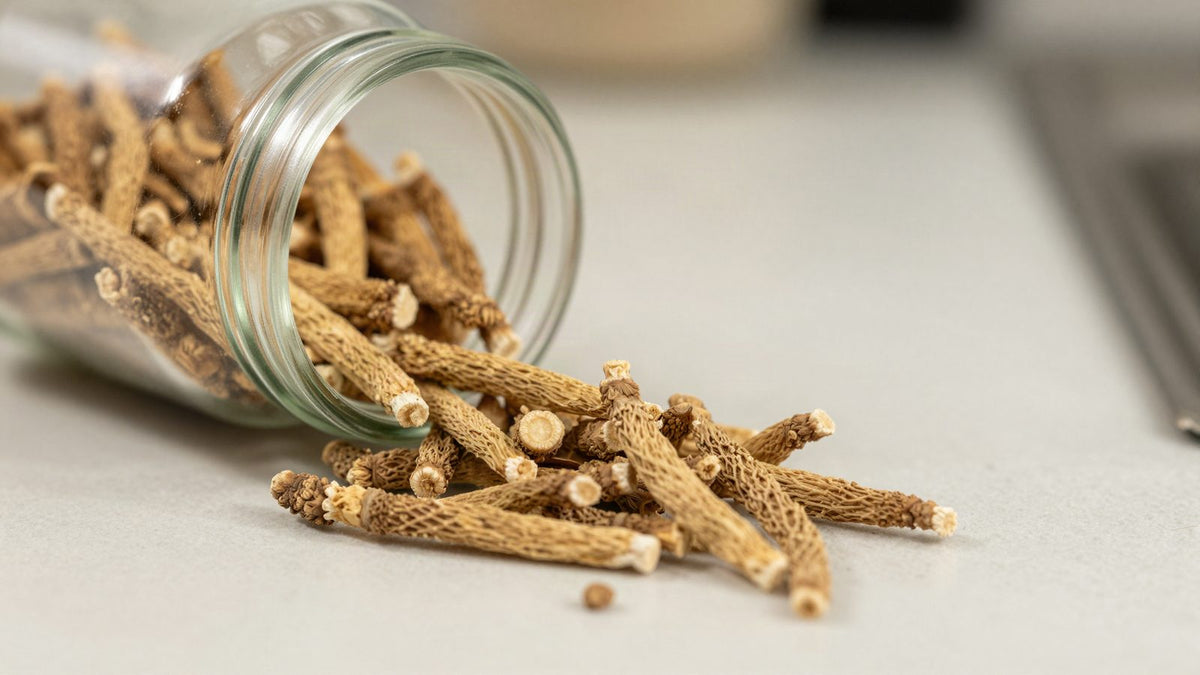
Isovaleric acid is the compound a 2020 systematic review names for the characteristic odor of dried valerian [13]. Here is how the pieces fit. Valerian is a plant whose roots and rhizomes are the parts used [12]. Valerian contains valepotriates, which NIH's supplement office describes as unstable compounds that break down during storage or in water, and not necessarily present in commercial products [5]. As valepotriates change, they free isovaleric acid [2], and a 2004 review states that valerian preparations yield it [7]. In one analysis of valerian root oil, isovaleric acid was the largest component, depending on how the oil was extracted [1].
| Compound | Where it was measured | Note |
|---|---|---|
| Isovaleric acid | 18.7% to 41.8% of CO2-extracted root oil [1] | Released from valepotriates [2]; named for dried valerian's odor [13]; "rancid-cheese" odor [4]; key foot-odor compound [6] |
| Valerenic acid | 8.2% to 11.8% of the same oil [1] | Second-largest component of that oil |
| Bornyl acetate | 11.6% of hydrodistilled oil [1] | Leading component when the oil is water-distilled |
The extraction method changed the mix: in hydrodistilled oil from the same roots, isovaleric acid was not among the major components listed [1]. So extraction and storage can change what a valerian product contains [1][5].
Why does valerian root smell like feet?
Valerian root and feet have a compound in common: isovaleric acid. On the foot, the acid is made by Staphylococcus epidermidis, a bacterium that normally lives on skin, when it breaks down leucine in sweat [3]. A 2015 study mapping bacteria across the foot calls isovaleric acid "the key foot odour compound" and detected it on the sole, where those bacteria are most numerous, but not on the top of the foot [6]. PubChem describes the pure compound as having a "rancid-cheese" odor [4].
Does valerian root make you smell bad?
We found no study on whether taking valerian changes how your body, breath or urine smells. The foot-odor research shows that isovaleric acid on skin comes from bacteria working on sweat [3]; it does not say anything about valerian you swallow. The distinctive odor NIH describes belongs to the plant and its preparations [5].
Does valerian root tea smell bad?
Valerian root tea is made from the same root, so expect the same distinctive odor NIH describes [5]. NIH's supplement office also notes that valepotriates break down in a watery environment [5], and their breakdown is one way isovaleric acid is freed [2].
Do cats like the smell of valerian?
Some cats like valerian: in a test of 100 domestic cats, about half responded to valerian root, compared with about two in three for catnip [10]. If you keep valerian at home, store it where pets cannot reach it. A MOODLY tin needs the same care for another reason: Sleep Strips contain xylitol, which FDA warns can be dangerous for dogs [11].
Where MOODLY fits

MOODLY makes supplement strips that melt on your tongue, one mood per tin. A MOODLY Sleep Strip contains 50 mg of valerian root extract in a raspberry-flavored strip, with melatonin 1 mg, lavender extract 20 mg, chamomile extract 10 mg and hibiscus extract 10 mg. Each strip is individually wrapped. We have no smell test of the strip to report, so we make no claim about its odor. One strip at bedtime, one a day maximum, adults 18 and over, not during pregnancy or nursing. More on valerian root, on how long valerian takes to work, and in the melatonin strips guide.
Related reading
- Can You Take Valerian Root Every Night?
- Chamomile for sleep: what the studies used
- Valerian root: what it is, how much is in a MOODLY strip, what studies used
Sources
- Safaralie A, Fatemi S, Sefidkon F, Journal of Chromatography A, 2008. PubMed PMID 18164718. https://pubmed.ncbi.nlm.nih.gov/18164718/
- Müller LG et al., Phytochemical Analysis, 2012. PubMed PMID 21953720. https://pubmed.ncbi.nlm.nih.gov/21953720/
- Ara K et al., Canadian Journal of Microbiology, 2006. PubMed PMID 16699586. https://pubmed.ncbi.nlm.nih.gov/16699586/
- PubChem (NIH National Library of Medicine), Isovaleric acid, CID 10430, Odor (from the Hazardous Substances Data Bank). https://pubchem.ncbi.nlm.nih.gov/compound/10430#section=Odor
- NIH Office of Dietary Supplements, Valerian: Fact Sheet for Health Professionals, updated March 2013 (archived copy). https://web.archive.org/web/20261025211914/https://ods.od.nih.gov/factsheets/Valerian-HealthProfessional/
- Stevens D et al., FEMS Microbiology Ecology, 2015. PubMed PMID 25764539. https://pubmed.ncbi.nlm.nih.gov/25764539/
- Eadie MJ, 2004. PubMed PMID 15509234. https://pubmed.ncbi.nlm.nih.gov/15509234/
- Kline JP et al., Biological Psychology, 2000. PubMed PMID 10725566. https://pubmed.ncbi.nlm.nih.gov/10725566/
- Si Q et al., Zhongguo Zhong Yao Za Zhi, 2013. PubMed PMID 24199561. https://pubmed.ncbi.nlm.nih.gov/24199561/
- Bol S et al., BMC Veterinary Research, 2017. PubMed PMID 28302120. https://pubmed.ncbi.nlm.nih.gov/28302120/
- U.S. Food and Drug Administration, Paws Off Xylitol; It's Dangerous for Dogs. https://www.fda.gov/consumers/consumer-updates/paws-xylitol-its-dangerous-dogs
- NIH National Center for Complementary and Integrative Health, Valerian, updated May 2025. https://www.nccih.nih.gov/health/valerian
- Shinjyo N, Waddell G, Green J, Journal of Evidence-Based Integrative Medicine, 2020. PubMed PMID 33086877, full text PMC7585905. https://pmc.ncbi.nlm.nih.gov/articles/PMC7585905/
*These statements have not been evaluated by the Food and Drug Administration. This product is not intended to diagnose, treat, cure, or prevent any disease.


