







By Alvyn Detavernier, founder of MOODLY · Updated November 2026
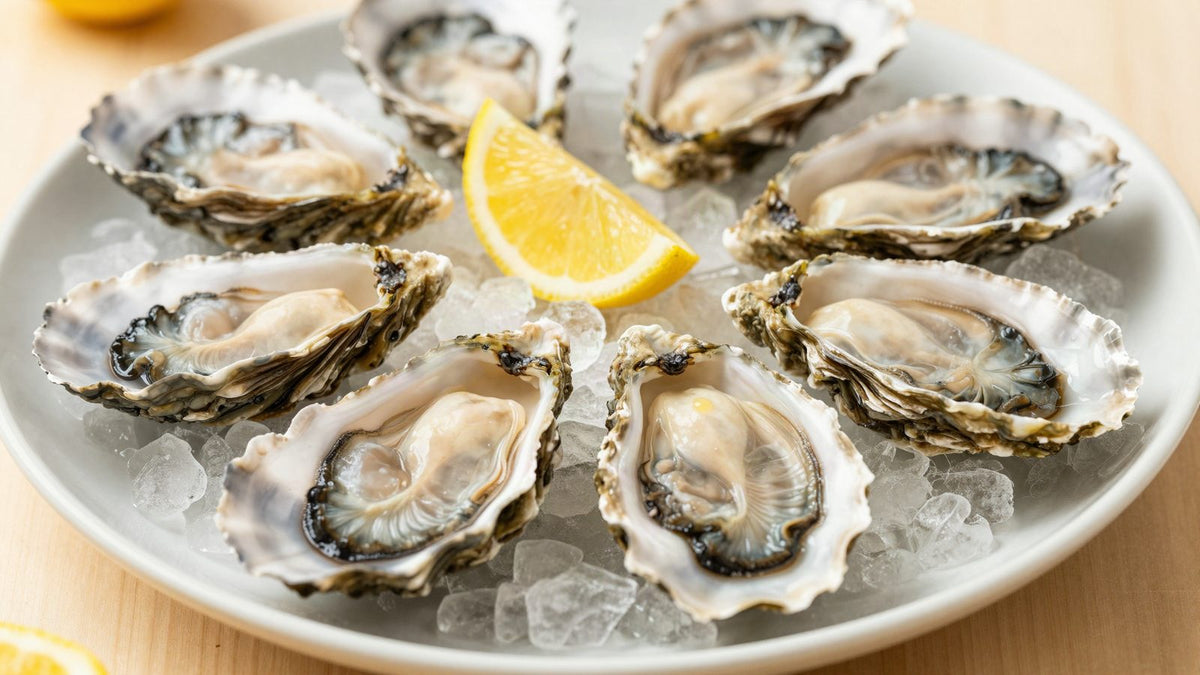
Oyster peptide is oyster protein cut into small fragments by enzymes, for example Pacific oyster (Crassostrea gigas) protein digested with trypsin or papain [1]. Because it comes from oysters, it is a shellfish ingredient. The oyster peptide studies we found on sexual health were in animals and cells, not people [1].
Key facts
- Oysters are mollusks, and allergies have been documented to all classes of mollusks, including bivalves such as oysters, clams and mussels [2].
- Tropomyosin, a muscle protein, is the main recognized allergen in mollusks, and the major oyster allergen is a tropomyosin [2][3].
- In a 2022 trial, 52 women after menopause with relatively low muscle strength took 1,000 mg a day of fermented oyster extract or placebo for 12 weeks; the authors say it may improve muscle strength, and the funder helped interpret the results [5].
- Under US allergen law, crustacean shellfish such as shrimp are major food allergens and mollusks such as oysters are not, so a label is not required to flag oyster the same way [10].
What does oyster peptide do?
Oyster peptide has no human trial on desire that we found: the human studies cited here tested fermented oyster extracts, an oyster hydrolysate and an oyster extract, at 1,000 to 1,200 mg a day where stated, for strength, skin or blood markers.
| Product | Who | Amount a day | How long | Measured | Found |
|---|---|---|---|---|---|
| MOODLY oyster peptide | Adults 18+ | 20 mg, in one strip | One strip a day at most | Not studied | No study has tested this strip |
| Oyster peptides (lab) [1] | Mice, mouse cells, worms | Not comparable | Not comparable | Markers of male reproductive biology | Animal and cell data only |
| Fermented oyster extract [4] | 54 adults aged 50 to 78 with relatively low muscle mass, walking regularly | 1,200 mg | 12 weeks | Knee and grip strength | No increase versus control |
| Fermented oyster extract [5] | 52 women after menopause, relatively low muscle strength | 1,000 mg | 12 weeks | Strength | May improve, per the authors; funder involved |
| Oyster hydrolysate [6] | People, number not in the abstract | Not in the abstract | Not in the abstract | Skin moisture | Reported by the authors as improved |
| Oyster extract capsules [7] | 7 healthy men aged 23 to 37, no placebo | 6 capsules | 8 days | Blood antioxidant tests | Changes from baseline |
The honest reading: 20 mg is a fiftieth of the smallest stated daily amount in these trials, and none of them tested MOODLY's oyster peptide or measured desire.
Oyster extract supplement: is it the same thing?
An oyster extract supplement is not one product. The trials above used fermented oyster extracts [4][5], an oyster hydrolysate whose preparation the abstract does not describe [6] and capsules of an oyster extract [7]; the oyster peptides in the lab study were protein broken down by named enzymes [1]. Results for one do not transfer to the others. Check the Supplement Facts panel, which must list each dietary ingredient and its amount per serving [12]. A guide to the panel: how to read a supplement facts label.
Oyster extract and shellfish allergy
Oyster extract and oyster peptide come from a shellfish, so if you avoid shellfish, do not take them. A 2008 review advises people allergic to mollusks to avoid all mollusks, and says cross-reactions with crustacean shellfish such as shrimp "may also occur" but are "less clearly defined" [2]. In lab tests on blood from people with oyster allergy, shrimp, lobster and crab tropomyosins took up most of the antibody reactivity to the oyster allergen [3].
Does cutting the protein into peptides remove the allergen? Do not count on it. In a lab digestion study, the oyster allergen's antibody binding fell in one simulated step and rose in another [8]. A lab and mouse study of five commercial peptide products, one made from oyster, predicted allergenic peptides in all five by computer screening, although the antibody binding it measured was below the positive threshold [9]. We found no study that tested an oyster peptide in people with shellfish allergy.
Oyster peptide side effects
Allergy is the documented risk of oysters, and oyster peptide comes from oysters [2]. Beyond that, the human trials of oyster products cited here were small and lasted 8 days to 12 weeks, which says little about longer use [4][5][7]. Some supplements interact with medications, and many have not been tested in pregnant or nursing women [12][13]. MOODLY strips are not for use during pregnancy or nursing.
Why the shellfish line is on the MOODLY label
The shellfish line is on the label because the strip contains oyster. Under US allergen law, which covers dietary supplements, crustacean shellfish such as shrimp are major food allergens, while mollusks such as oysters are not [10][11]. So a label is not required to flag oyster the way it must flag shrimp. Ours prints it on every tin.
Where MOODLY fits

MOODLY makes supplement strips that melt on your tongue, one mood per tin. MOODLY Libido Strips hold 20 mg of oyster peptide, 50 mg of Cordyceps militaris and 50 mg of shilajit per strip, chocolate flavor. Contains: Shellfish (Oyster peptide). No study has tested this strip or this formula. On the other two ingredients: can you take shilajit and cordyceps together?
Related reading
- Libido Strips: What They Are and What's in Them
- Can you take shilajit and cordyceps together?
- How Do You Read a Supplement Facts Label?
- All MOODLY ingredients
Sources
- Zhang W et al., Journal of Ethnopharmacology, 2021. PubMed PMID 32918991 (animal and cell study)
- Taylor SL, Advances in Food and Nutrition Research, 2008. PubMed PMID 18291306
- Leung PS, Chu KH, Clinical and Experimental Allergy, 2001. PubMed PMID 11529900
- Lee YL, Lee SY, Frontiers in Nutrition, 2022. PubMed PMID 35958254
- Rheu KM et al., International Journal of Environmental Research and Public Health, 2022. PubMed PMID 36554328
- Dusabimana T et al., Life Sciences, 2024. PubMed PMID 39424270
- Tapiero H et al., In Vivo, 1998. PubMed PMID 9706475
- Zhang J et al., Allergologia et Immunopathologia, 2020. PubMed PMID 31623945
- Xiong W et al., Food and Function, 2023. PubMed PMID 37038718
- U.S. Food and Drug Administration, Questions and Answers Regarding Food Allergens (Edition 5), Guidance for Industry, question B.9. fda.gov
- U.S. Food and Drug Administration, Food Allergies. fda.gov
- U.S. Food and Drug Administration, FDA 101: Dietary Supplements. fda.gov
- NIH National Center for Complementary and Integrative Health, Using Dietary Supplements Wisely. nccih.nih.gov
*These statements have not been evaluated by the Food and Drug Administration. This product is not intended to diagnose, treat, cure, or prevent any disease.


